Effective parent-teacher associations key to improving education quality: Experts

Parent-teacher associations can play a significant role in improving the quality of education, increasing student attendance and reducing dropout rates, education stakeholders said at an event in Dhaka today.
They said research shows that schools with effective parent-teacher associations have substantially lower dropout rates and higher student attendance, while also providing stronger support for students' mental health and wellbeing.
Speakers said improving the quality of education requires strong and effective partnerships among schools, families and communities.
 Keep updated, follow The Business Standard's Google news channel
They also said the National Education Policy 2010 advocates for establishing active parent-teacher associations to address student dropout and support overall school development.
To realise their full potential, these associations require clear and specific implementation guidelines, they said, adding that effective parent-teacher associations can strengthen teacher accountability and encourage greater parental awareness and involvement in children's education.
The observations were made at a knowledge dissemination session titled "Knowledge Dissemination on PTA Strengthening and FLN Catch-up Initiative Inception: Learning Together", held at BRAC Centre in Mohakhali, Dhaka, on Sunday, 21 June, 2026.
The event was organised by BRAC Education Programme.
Key stakeholders from the government, non-governmental development organisations and the education sector participated in the event.
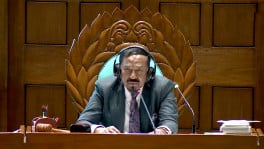
Speaking as chief guest, Ministry of Primary and Mass Education Secretary Md Shakhawat Hossain said one of the major concerns in the country's education system is that many students drop out before reaching the Secondary School Certificate examination.
"One reason behind this is that students often fail to understand lessons in the classroom. To address this, efforts have been made to ensure teacher accountability and bring struggling students back on track through diagnostic assessments," he said.
"The government is working to raise primary education to global standards," he added.
BRAC Education, Skills Development and Migration Programme Director Safi Rahman Khan said sustainable development and accountability in the education system cannot depend solely on a centralised structure.
"Bringing change to such a large education system is not realistic without community participation. A new social movement is needed to strengthen parents' awareness of both their responsibilities and rights in ensuring quality education," he said.
Directorate of Primary Education Additional Director General, Fourth Primary Education Development Programme, Mohammad Atiqur Rahaman said parent-teacher associations are among the most underutilised assets in the education sector.
"If activated effectively, they can strengthen teacher accountability in schools and make it much easier to improve the quality of primary education and achieve foundational learning outcomes," he said.
BRAC Education Programme Programme Head, Development, Md Moazzem Hossain presented the project's key achievements and formally introduced the Catch-Up Learning Programme, designed to address learning gaps.
"As a responsible organisation, BRAC works alongside the government in areas where there is scope to further strengthen the education system. PTAs are a reflection of society itself. Greater engagement of this important group can enhance social accountability and transparency in the education sector," he said.
BRAC is implementing the PTA Strengthening Project to improve the effectiveness of parent-teacher associations, raise parental awareness and increase community participation, thereby strengthening social accountability and improving student retention.
The project is being implemented in 46 government primary schools across Sadar, Badarganj and Pirganj upazilas of Rangpur District.
To assess the impact, potential and lessons of strengthening parent-teacher associations, BRAC conducted a research study involving surveys with 600 parents across 60 schools, interviews with education officials and focus group discussions with parent-teacher association committee members and parents.
The study found that schools with effective parent-teacher associations had significantly lower levels of child labour, higher student attendance and substantially increased mental health-related activities.
BRAC has also launched the Accelerated Catch-Up Learning Programme to address learning gaps among primary school students.
Developed as a low-cost and scalable model, the programme aligns with the priorities of the government's Primary Education Development Programme-5.
The programme will be implemented in six upazilas: Chilmari in Kurigram and Fulchhari in Gaibandha under Rangpur Division; Bakshiganj in Jamalpur and Nalitabari in Sherpur under Mymensingh Division; Jaintiapur in Sylhet under Sylhet Division; and Lalmohan in Bhola under Barishal Division.
The three-year programme will cover 735 government primary schools.
It includes remedial, or recovery, interventions for students in Classes 3 to 5 and preventive interventions for students in Classes 1 and 2.
The programme is expected to bring rapid and visible improvements in reading, writing and mathematics competencies. It will also strengthen the capacities of teachers, headteachers and education officials.
In his closing remarks, BRAC Education Programme Senior Adviser Profulla Chandra Barman said the joint participation of parents and teachers is essential to ensuring quality education.
"When parents are directly involved in their children's education, it has a profoundly positive impact on learning outcomes. Efforts are therefore being made to revitalise and strengthen PTAs to achieve this goal," he said.