Why Bangladesh needs to maintain electronic health records
If Bangladesh can shift its healthcare trajectory towards digital record-keeping, it can improve healthcare service with data-driven insights

A few years ago, I worked as a research assistant on a breast cancer project, where I closely observed cancer patients at the National Institute of Cancer Research & Hospital (NICRH) in Dhaka. Being from a high socioeconomic stratum, it was never difficult for me to avail private healthcare facilities in Bangladesh. That is why I was appalled to see the magnitude of complexity in accessing health care at the National Institute of Cancer Research & Hospital (NICRH).
The NICRH supports a huge number of patients daily, mostly because it is affordable. However, people struggle to get the right service. In the absence of a proper online appointment system, rural patients have to come in the morning, before dawn, and wait in line to see the doctor. The lack of service availability compounds the issue; patients physically come from far and find that there are no chemotherapy slots.
Adding more to the complexity, elderly cancer patients often forget to bring their previous prescriptions and reports. Even if they bring most of it, they forget one or two reports and doctors are then unable to give them a conclusive answer on their cancer status.
Mitigating such problems in the past was arduous, especially with a third-world infrastructure like ours. However, problem-solving has become notably easier since the advent and spread of digital software. Which begs the question, when the whole world is revolutionising its health system through digital adoption, why are we still struggling to catch up?
 Keep updated, follow The Business Standard's Google news channel
A cloud-based system connecting patients with doctors more efficiently and in a less time-consuming manner is imperative. Electronic Health Record (EHR) has emerged as a crucial global innovation in this regard, with the capacity to reform the whole healthcare system of Bangladesh. It is a digital repository that keeps a patient's full medical history from all the medical services the patient has used over time, and is accessible in electronic format.
A wide range of services falls under electronic health record, like storing medical records, patient demographics, laboratory reports, medication records, immunisation records, etc. Multiple start-ups are now integrating other services like telemedicine and online appointments under the same umbrella of EHR.
Paper-based medical records are less efficient, failing to meet healthcare providers' needs and complicating communication with patients. In the South and Southeast Asian context, the experience is even more horrific.
In an article in the Stanford Journal of Public Health, the writer mentions a few cases she encountered during her medical visits in Southeast Asia. The doctor went to the wrong village in Indonesia due to misplaced medical records. Similarly, in Thailand, millions of indigenous villagers who do not have citizenship struggle to access healthcare due to language barriers, nomadic lifestyles and the absence of government IDs.
With its significant Rohingya and ethnic minority population, Bangladesh also grapples with the inefficiencies of paper-based health records. Rural people come to Dhaka with emergency medical conditions, without paying attention to bringing all medical reports along. Sometimes, forgetting one report can waste valuable time and cause financial problems.
Developed countries are already enjoying the advantages of digital health records. According to the World Health Organization (WHO) in 2016, e-health tools and EHR are seen as very or highly beneficial for 70% of the non-OECD countries. In the United States, ophthalmologists have almost quadrupled their EHR use, from 19% in 2008 to 72% in 2016.
The adoption of EHR in healthcare yields positive financial returns, simplified patient files, enhanced patient safety, and streamlined data analysis.
If Bangladesh can shift its healthcare trajectory towards digital record-keeping, it can improve healthcare service with data-driven insights. The e-health initiative in Bangladesh was first launched in 1998 by the Ministry of Health & Family Welfare (MOHFW) through the Health & Population Section programs (HPSP). A study exploring physicians' perspectives on implementing EHR systems in Bangladeshi hospitals has reported the Bangladesh government anticipates the high potential for EHR to change the health system.
The age-old adage "it's easier said than done" holds true in this context. No matter how easy and promising it sounds to implement and adopt EHR, it has many more challenges than anyone can think of.
Bangladesh's healthcare system has made strides in recent years. Still, it faces significant challenges such as overcrowded hospitals, resource limitation, lack of digital literacy of service providers and unequal access to quality healthcare in rural regions.
A robust and reliable internet connection is the key for EHR, which is the major problem in Bangladesh, along with limited infrastructure. Due to this, people from remote and rural areas may not be able to access EHR.
Even though the main goal of adopting the EHR system is to make the process less people-driven and more system-driven, it requires a lot of skilled personnel who can handle the technology and guide patients accordingly.
One of the most sensitive issues with the EHR system is data security and privacy concerns. With the digitisation of patient health records, ensuring data security and privacy becomes crucial. Cybersecurity threats and breaches can compromise sensitive patient information, leading to potential legal and ethical consequences. Ensuring strict data protection measures and maintaining privacy regulations are integral, but quite tricky.
Since the Bangladesh government does not follow a central health information database, various healthcare facilities and organisations may use different EHR systems that are not always interoperable.
There are already some apps from hospitals and organisations in the market that are working with EHR. If they do not comply with standardisation, it can hinder the seamless exchange of patient data between different healthcare providers, impacting care coordination and health outcomes.
Being an LMIC country, Bangladesh also has monetary concerns, since implementing EHR systems requires a substantial financial investment.
Lastly, resistance to adopting new technologies would be an additional problem implementers will have to deal with. For years, healthcare professionals and patients have been accustomed to traditional paper-based systems. To incorporate EHR, the healthcare system will need to be more technologically sound, because it may seem complex to them in the first place.
According to Bangladesh Telecommunication Regulatory Commission (BTRC), by January 2017, there were 179.91 million mobile phone subscriptions and 66.94 million internet subscribers. Even though more people are using the internet and smartphones, using EHR requires more than access to technology. Cultural beliefs and socioeconomic conditions always influence the willingness to adapt in any population.
To streamline the process smoothly, the government must take the initiative to create a knowledge base for e-health. This knowledge hub or website should include the contact and details of the organisations providing different components of EHR, such as Neeramoy, Doctorkoi, DocTime etc. The Directorate General of Health Service (DGHS) is working on this, but the website is not updated properly.
Government emergency helpline services, such as fire service, ambulance, etc., should also be integrated with these apps or systems, so that anyone with these apps can access these services from any platform. The government should pay attention to making these startups or initiatives sustainable where they could earn revenue.
Though the government supports startups via different grants, it is insufficient. Then again, health apps should be as user-friendly as social media platforms. This also demands awareness among healthcare professionals and patients about EHR. Moreover, overcoming tech resistance necessitates training, user-friendly systems and public campaigns showcasing EHR advantages.
Focusing on EHR-based infrastructures aligns with the SDG goal for universal health coverage. We must remember that EHR's accessibility and interoperability are vital for equitable healthcare. Winston S. Churchill once said, "Healthy citizens are the greatest asset any country can have." As a developing nation, we still have a long way to go. Needless to say, Bangladesh still needs its citizens to keep building this nation better.

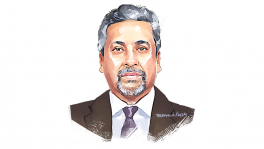
Ishrat Binte Aftab is a Research Associate at James P Grant School of Public Health, BRAC University.
Disclaimer: The views and opinions expressed in this article are those of the author and do not necessarily reflect the opinions and views of The Business Standard.