Budget FY27: Implementation strategies and mechanisms
Budget FY27’s success will hinge on effective implementation, stronger fiscal discipline, revenue reforms, and efficient project execution to achieve its growth and development targets

The overall outlay of the FY27 budget (Tk9.38 lakh crore) can be considered optimum and reasonably aligned with the proposed revenue-expenditure framework and development priorities for the fiscal year.
The projected GDP growth rate of 6.5% is realistic and achievable. However, attaining this target will require a significant and sustained increase in exports and overseas remittances, along with higher levels of domestic and foreign investment. Reducing inflation to 7.5% in FY27, compared with 9.2% in the previous fiscal year, should provide some relief to citizens. At the same time, the public investment ratio is projected to rise to 13.1%, up from 10.8%.
Private investment, however, is expected to grow at a much slower pace, increasing only marginally from 21% to 21.3% of GDP. In this context, there is a clear need to ensure qualitative and impact-oriented public expenditure, better alignment between fiscal and monetary policies, sustained growth in domestic productivity, and improved food and energy security.
 Keep updated, follow The Business Standard's Google news channel
The revenue-expenditure gap remains a key challenge in balancing resource mobilisation and utilisation. The anticipated budget deficit of 3.6% of GDP will necessitate borrowing from domestic banks and external sources. Increased domestic borrowing may crowd out private-sector credit, reduce liquidity in the financial system, and exert upward pressure on inflation.
On the other hand, greater reliance on external budgetary support and foreign loans, if not utilised efficiently, could undermine project implementation and contribute to a rising external debt burden. Given existing capacity constraints, it is important to ensure the efficient implementation of the Annual Development Programme (ADP) through a consistent and evenly distributed expenditure pattern throughout the fiscal year. For FY27, the ADP allocation is estimated at 32% of total public expenditure, significantly higher than in the previous fiscal year.
Achieving the desired outcomes will require efficient project implementation, supported by procedural compliance, due diligence, and robust monitoring and evaluation mechanisms. At the same time, the increased share of foreign loans and grants, accounting for 47.7% of development financing, calls for prudence and caution to ensure that external debt risks do not escalate from a moderate to a high-risk level.
Sectoral allocations broadly reflect the government's stated priorities and intended outcomes. The emphasis placed on the education and health sectors is likely to yield benefits in both the short and medium term. Likewise, investments in infrastructure and entrepreneurship development should help stimulate private investment, enhance productivity, and generate employment opportunities.
The allocation for social safety net programmes has been moderately increased to 2.1% of GDP, which should have a noticeable impact on poverty reduction. However, given the rising trends in both absolute and relative poverty over the past two decades, further pro-poor investments are warranted.
The Family Card programme is expected to deliver meaningful benefits and could emerge as an exemplary mechanism for targeted social assistance. Building on its experience, social protection and safety net programmes could be further expanded and strengthened in the years ahead. Effective decentralisation is critically important for effective implementation of these programs to combat growing rural and urban poverty.
Despite uncertainties surrounding the achievement of revenue targets, the revenue-generating proposals in the budget appear consumer-friendly and are aimed at mobilising additional resources without imposing excessive burdens on citizens. For instance, the proposed reduction in taxes on medical equipment, agro-based inputs and products, import-substituting manufacturing inputs, and renewable energy technologies is expected to ease cost pressures on low- and middle-income households.
A balanced strategy that combines export-oriented growth with import-substituting industrialisation should enhance domestic productivity and strengthen overall economic competitiveness. However, revenue mobilisation cannot be achieved solely through broadening the tax base and increasing tax rates.
There is a pressing need to break the persistent cycle of revenue stagnation through comprehensive reforms of the National Board of Revenue (NBR). The separation of revenue policy from revenue administration has the potential to improve efficiency and accountability, provided that the respective terms of reference (TORs) and programme outcomes are clearly defined, functionally differentiated, and effectively harmonised.
Key implementation challenges can be addressed through improving productivity and competitiveness in key growth sectors, strengthening project implementation capacity, and adopting a more refined input–output budget model based on demand-supply equilibrium. It also requires functional decentralisation of the NBR, performance-based budget management, and stronger coordination among ministries for transparent and timely fund utilisation. Broader institutional reforms are needed to improve the ease of doing business, better align fiscal and monetary policies, and deepen decentralisation and delegation. Finally, enhanced monitoring, evaluation, and regulatory oversight are essential to ensure efficient resource use and to mitigate external shocks effectively.
Budgetary policy frameworks and their implementation should also support efforts to effectively address the challenges associated with Bangladesh's graduation from the Least Developed Country (LDC) category by 2029, as agreed with the United Nations. These measures should help enhance the country's competitiveness and strengthen its resilience, enabling Bangladesh to harness its potential and progress towards the vision of becoming a trillion-dollar economy within the stipulated timeframe.
Above all, there is an urgent need to enforce financial discipline, strengthen accountability and transparency, reduce and ultimately eliminate non-performing loans, and curb the illegal outflow of domestic resources.
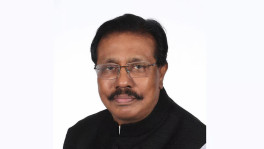
Dr Mohammed Parvez Imdad is Lead Economic Advisor, Policy Analyst and Senior Consultant with several years of experience in government and international organisations. He is based in Washington DC and can be reached at: [email protected].
Disclaimer: The views and opinions expressed in this article are those of the author and do not necessarily reflect the opinions and views of The Business Standard.