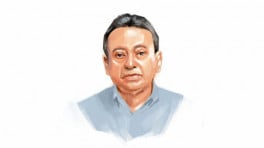
The beard turned white somewhere else
A viral border video has sparked fierce debates over citizenship and sovereignty, but beyond the politics lies a more haunting question: what happens when a lifetime of memories, belonging and identity becomes trapped between nations?

I do not know which country he belongs to.
Perhaps everyone watching the video misunderstands it. Over the past weeks, images from the Bangladesh-India border have triggered familiar debates. Citizenship. Sovereignty. Security. Illegal migration. National interest.
The arguments arrive quickly. They always do. One side finds certainty in documents. Another finds certainty in geography. Everyone seems to know where the border is. Nobody seems entirely certain where the man belongs. And every time I watch the video, my attention drifts away from the arguments and settles on the old man standing in the middle. The white beard. The tired eyes. The face that appears strangely detached from the noise surrounding it. Not angry. Not frightened. Just tired. The kind of tiredness that seems older than the dispute itself.
 Keep updated, follow The Business Standard's Google news channel
Behind him stretches an ordinary landscape of green fields and open sky. Somewhere, a bird is probably returning to its nest. Somewhere, a farmer is probably heading home before sunset. And there stands an old man while younger men debate where he belongs. The scene feels strangely cinematic. Not because it is dramatic. Because it is quiet. The most painful things usually are. Whether he is Bangladeshi or Indian, whether the documents are accurate, whether one side is legally right—these questions require facts that most viewers lack. But the face makes it difficult not to think about time.
Before the issue of citizenship arose, he was a child living in an unspecified location. There was a road that taught him how to walk. A dusty lane where he learned to ride a bicycle. A tree that watched him grow older. A mother who called him home before sunset. A father who taught him how life worked.
The details may be wrong. The truth behind them is absent. Nobody arrives in this world at a border. Life happens elsewhere. Which is perhaps what makes the image so unsettling. The argument is taking place in the present. But life happened in the past. And while everyone asks where he belongs, another question lingers: What did he leave behind? It is easy to forget that old men were once young. This image makes that impossible.
There may have been a teenage girl who made his heart race. There may have been children who inherited his smile. There may have been friends who are no longer alive. There may have been people who once knew exactly where he belonged. Perhaps somewhere there is still a village that remembers him.
A tea stall owner who once knew his order. A neighbour who knew his father's name. A road that still carries the imprint of his footsteps. Perhaps the strangest thing about the image is that it is not only a man standing between two countries. Somewhere between those border posts hangs something less visible. A childhood. A language. A collection of memories. A lifetime of belonging. The body stands in the field, but the identity seems suspended elsewhere, waiting for someone to decide where it is allowed to belong.
The tragedy is not that he may have lost a country. The tragedy is that a country may have forgotten him before he forgot it. Not that a man stands at a border. But an entire lifetime stands there with him. Around the world, millions of people live without a recognised nationality. We call them stateless. The word sounds administrative. Almost harmless. It seems to belong in reports and databases.
Yet there is nothing technical about uncertainty. It's natural to be unsure which door remains yours when every other door closes. Watching your identity drift between systems that cannot decide what to do with you is administrative. Perhaps that is the irony of modern civilisation. For most of human history, there were no passports. No biometric databases. No immigration forms. No border checkpoints. The first human beings who left Africa carried no documents. They carried hope. For thousands of years, people crossed rivers, mountains, forests, and deserts searching for places to live. Human beings came first. States came later. The state was one of humanity's greatest inventions. We built it for protection. For dignity. For order. For belonging.
Yet the old man standing in that field leaves behind a question that feels both simple and dangerous: Have our institutions grown so large that the person before them is impossible to see? Looking at his face, it is challenging to see only a political argument. There is a life there. A life that survived long enough to gather memories. Long enough to gather losses. It lived long enough to outlast the people it once loved. And yet there he stands, surrounded by borders. Perhaps he still carries hope. I sincerely hope he does. But there is something in his expression that continues to haunt me. Not despair. Something quieter. Resignation.
The kind that arrives when life has already argued with you for too many years. He seems like the kind of man who should be going home. Instead, he seems to be standing before a question. Not about his future. About his past. Not where he is going. But where did all those years belong? I do not know which country he belongs to. Perhaps nobody watching the video truly understands.
But I know this. An entire life happened somewhere. The laughter happened somewhere. The grief happened somewhere. The friendships happened somewhere. The losses happened somewhere. The memories happened somewhere. The beard turned white somewhere else.
And looking at that old man standing at the border, it becomes difficult not to wonder whether anyone still remembers where.
Evan Iqram works for Transparency International Bangladesh
Disclaimer: The views and opinions expressed in this article are those of the author and do not necessarily reflect the opinions and views of The Business Standard.