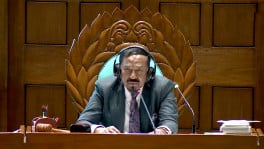
Cenbank keeps tight monetary policy, sets 18-month plan to cut default loans
The central bank’s plan includes special opportunities for repaying bad loans, faster loan recovery through legal reforms and the creation of asset management companies to remove distressed assets from banks’ balance sheets.

The Bangladesh Bank has unveiled an 18-month plan to reduce a significant portion of defaulted loans in the banking sector, while maintaining its contractionary monetary policy stance to bring inflation under control.
The central bank's plan includes special opportunities for repaying bad loans, faster loan recovery through legal reforms and the creation of asset management companies to remove distressed assets from banks' balance sheets.
While announcing the monetary policy for the first half of the fiscal 2026-27 yesterday (30 June), Bangladesh Bank Governor Mostaqur Rahman said, "The central bank has taken an initiative to reduce non-performing loans within the next 18 months. As part of this, special opportunities are being provided for repaying bad loans under the Exit Policy, which has been effective in countries like Ukraine and Turkey."
The central bank has also proposed amendments to the Money Loan Court Act to complete loan recovery cases within six months. It also proposed introducing a Distressed Asset Management Act that would allow the formation of asset management companies to take over banks' "toxic assets" or bad loans.
 Keep updated, follow The Business Standard's Google news channel
The governor said such companies were expected to become effective by 2027.
He described keeping unnecessary bad loans on banks' balance sheets as "misrepresentation" and said banks were being encouraged to write them off. However, borrowers would not be freed from their liabilities and legal proceedings would continue, he added.
Alongside the bad loan recovery plan, the Bangladesh Bank kept its policy rate unchanged at 10% and set the private sector credit growth target at 6.8% for the July-December period.
This is the first monetary policy announced by the central bank under the current BNP-led government and Governor Mostaqur. The FY27 monetary policy aims to bring inflation down to 7.5%, while increasing private sector credit growth from the previous target of 5%.
Speaking at the briefing, Mostaqur said the policy rate had been kept unchanged to control inflation. "Monetary policy mainly works by controlling demand-side pressures to reduce inflation. However, for it to work fully, coordination with fiscal policy and supply-side measures is necessary," he said.
He said monetary policy alone could not control inflation.
"Improving market management and stopping syndicates or market manipulation are necessary. Alongside using various monetary policy tools, we are working with other stakeholders to reduce inflation," he added.
The central bank said inflation had eased earlier but rose again after tensions in the Middle East intensified following US and Israeli attacks on Iran. Inflation reached 9.42% in May, the highest since January 2025, with no immediate signs of a major decline.
As a result, the Bangladesh Bank decided to maintain the repo rate at 10%.
To support economic growth, the central bank said its Tk60,000 crore package to boost private sector investment would play an important role. Of the package, Tk23,000 crore has been allocated for small entrepreneurs and the rural economy, including agriculture and CMSME sectors.
"We have corrected the mistakes of the Covid-19 incentive packages from 2020 and will ensure stricter monitoring this time. Loans will not only be provided to factories that have shut down due to a lack of funds, but also to those where problems related to energy or management can be resolved," Mostaqur said.
The governor said Bangladesh Bank had recently capped the spread between banks' deposit and lending rates at 4% to encourage private sector credit growth. He said the move would benefit both depositors and borrowers, while preventing banks from making unusually high profits.
Deputy Governor Dr Habibur Rahman said the central bank expected economic activities to strengthen because of government and central bank incentives. Private sector credit growth could rise to 8% by the end of the financial year, he said.
GDP growth is expected to reach 6.5% and inflation to remain at 7.5% by the end of the next financial year, in line with government targets set in the national budget, he added.
However, as per Bangladesh Bank's forecast the country's economy will grow by 6.1% in FY27.
Meanwhile, the central bank left other key policy rates unchanged as well. The Standing Lending Facility (SLF) rate remains at 11.5%, and the Standing Deposit Facility (SDF) rate at 7.5%.
'Will not accept pressure from influential groups'
Governor Mostaqur said the Bangladesh Bank would take a firm stance to restore good governance in the banking sector, adding that special audit teams had recently been sent to six banks to examine foreign exchange and information technology-related matters.
The audits found unusual information, including cases where letters of credit (LCs) payments for 2025 had been made ahead of schedule, he said.
Mostaqur added that the central bank would impose the highest penalties for violations of rules and would not accept pressure from influential groups.
Some old investigations that had been halted or lost could also be reopened, he said.
The governor said banks had received Tk17,250 crore in liquidity support during the Awami League government and Tk51,000 crore during the interim government.
However, after the current administration took office, no special support had been provided in the past four months, except Tk13,000 crore given to Islami Bank.
Foreign exchange, loan recovery
Mostaqur said Bangladesh's foreign exchange reserves had crossed $37 billion and there was no major short-term exchange rate risk.
With local lending rates remaining at 12-14%, entrepreneurs were being encouraged to take foreign loans at lower interest rates of 5-6%, he said. The central bank is also considering removing the requirement for prior permission when companies borrow from foreign parent companies.
He said the issue of Meghna Group's $80 million loan package, which had initially raised concerns, was now being viewed positively because of the policy decision to make foreign borrowing easier.
"Twenty-nine banks are working together to find a solution to City Group's liabilities of nearly Tk24,000 crore, with Bangladesh Bank playing the role of coordinator. I hope we will reach an effective solution," he said.
On recovering laundered money, the governor said a taskforce led by him was regularly working to bring back funds taken abroad. He said various agencies had been requested to appoint specialised and permanent manpower for the effort.
Bangladesh Bank's new Exit Policy is aimed at preventing repeated rescheduling opportunities for loan defaulters, while the planned asset management companies are expected to help banks deal with distressed assets by 2027.